Brief
For operators, partners, and capital-markets readers
Building on the first brief’s introduction to Real-World Intelligence and the second brief’s examination of QuantrusX, this brief explores RMX’s intended approach to connecting on-site computing deployments through the QuantrusX Distributed Data Center, or QXDDC.
A facility needs intelligence that can work within its own operating environment, close to the activity it interprets and the people responsible for responding. As that approach extends across more locations, the question becomes how those deployments can form part of a wider architecture without losing the local processing, context, and control that make them useful at each site.
QXDDC describes RMX’s intended answer: a company-operated intelligence fabric through which connected QuantrusX nodes can learn from one another while each site retains sovereignty over its data. The purpose of those connections is to bring learning from across the fabric back into each operation, helping the local node interpret activity more effectively and giving its operators better context for a response
Building from the infrastructure at each site
Part Two described the QuantrusX node as the computing hardware installed at a customer’s facility, where camera activity is detected and interpreted for operator review. That hardware gives intelligence a place inside the operation, allowing video to be processed near the cameras that produce it rather than routed to a remote cloud service for interpretation.
The QXDDC approach builds from this deployment model. As QuantrusX reaches additional facilities, the intended architecture would connect computing resources already serving those environments, rather than make a single central facility the destination for their video processing. Growth would therefore be tied to the deployment of intelligence within working sites, with each location providing a local operating foundation for the wider fabric.
What makes the data center distributed
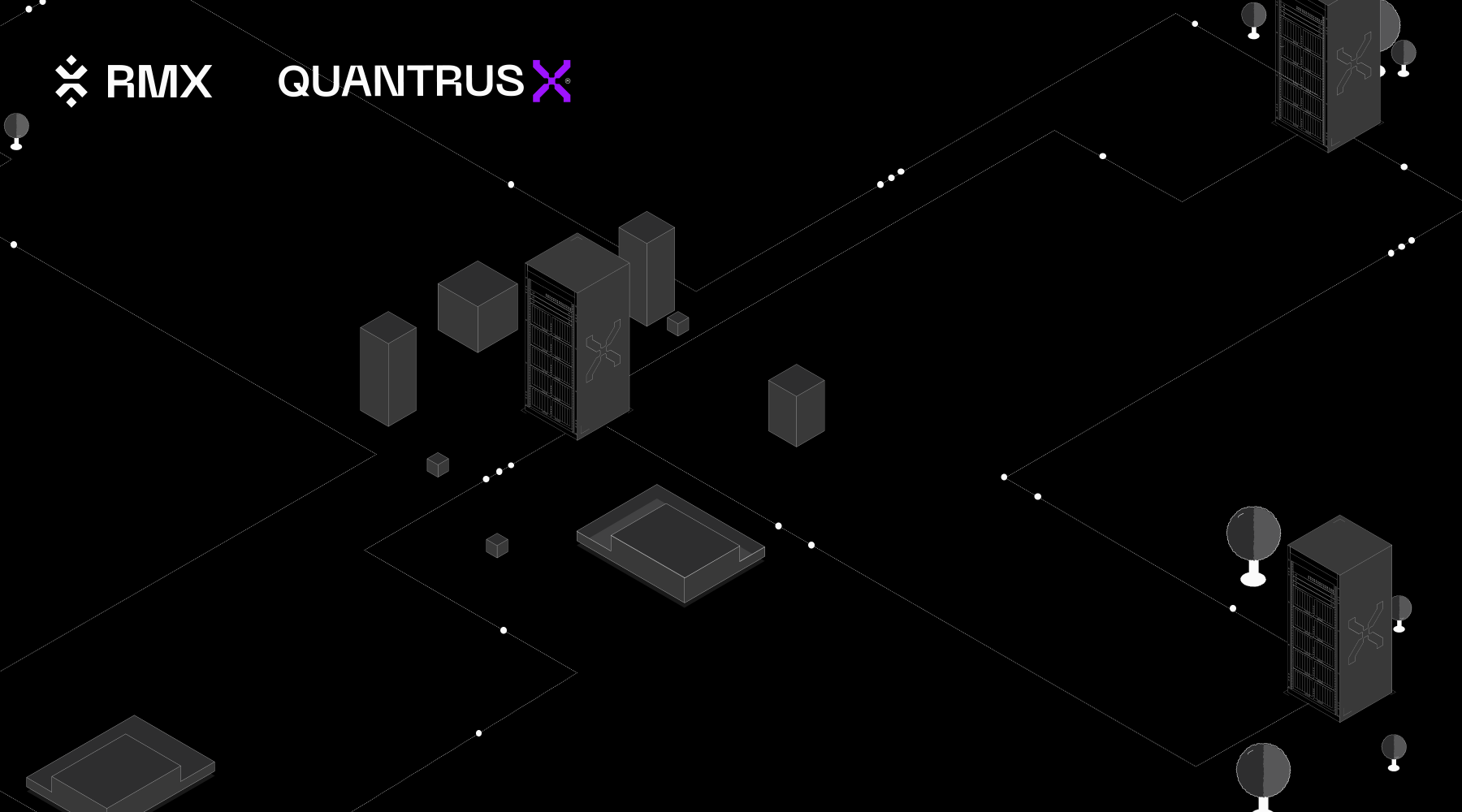
The term Distributed Data Center describes how RMX intends to organize the computing infrastructure behind that fabric. Instead of concentrating the architecture at one location, QXDDC would connect nodes across the physical environments they serve. The nodes are peers within the design, rather than remote collection points feeding a larger central node.
That distinction matters because the local deployment has a purpose of its own. A node supports the people running its facility, with information interpreted in the context of that environment. Connecting it to other nodes is intended to extend the architecture around that function, not move the function away from the site or make local response decisions the responsibility of a central system.
The intelligence fabric describes how these deployments connect and learn from one another; QXDDC describes the distributed computing architecture supporting that approach. QuantrusX remains the intelligence an operator uses at the facility, with the wider fabric intended to improve what it can contribute locally.
Keeping local control within a connected architecture
Learning across sites and retaining control of site data are intended to work together in QXDDC. The distinction is between making learning useful across the fabric and making a customer’s underlying information available to other sites. A facility should be able to benefit from experience beyond its own perimeter without surrendering authority over its data.
QuantrusX provides the local foundation described in Part Two: video recording and interpretation remain on the premises, while event records, snapshots, and descriptions support an operator-led response. QXDDC is intended to extend that foundation through governed learning between nodes, without opening one facility’s footage to another or treating connection to the fabric as permission to pool customer data.
Development of this capability would need to define what learning can be shared, how it is reviewed and applied, and the permissions governing participation. Customer agreements and access controls would establish those boundaries, with each site retaining control of its data and trained personnel retaining responsibility for response decisions.
Learning across sites, responding locally
For operators, the value of shared learning would be measured at their own facility. Experience gained elsewhere in the fabric is intended to help a local node interpret relevant activity, provide more useful incident context, and better support the people assessing a situation. That learning would need to be applied in the context of the receiving site, where operating conditions, rules, and response procedures may differ.
The intended benefit is a site better equipped to respond because its intelligence can draw on learning beyond its own experience, while the decision to act remains local. For RMX, additional deployments would broaden both the operating environments served and the experience available to inform the fabric. Its value would depend on the quality and relevance of that learning, not simply the number of connected nodes.
The wider business
QXDDC extends the relationship between RMX’s intelligence business and the infrastructure through which it is delivered. It describes an architectural direction, not a separate product or an announcement of pooled computing capacity available for sale. Its development would build on QuantrusX deployments and the work required to connect them responsibly.
The three briefs describe a connected progression. Real-World Intelligence is RMX’s name for intelligence built at the physical edge; QuantrusX brings it into the customer’s operation; and QXDDC is the intended architecture through which those deployments connect and learn from one another. The ambition is to make each site better informed through the fabric while preserving its data sovereignty and the authority of the people responsible for responding.
RMX: Intelligence Where the World Happens.
Disclaimer
This document contains forward-looking statements that are subject to risks and uncertainties, including those described in the risk factors section of the reports and other documents RMX Industries, Inc. (the “Company”) files with the Securities and Exchange Commission. Actual results could differ materially from those expressed or implied. Forward-looking statements speak only as of the date of this document, and the Company does not undertake any obligation to update them.