Press Release
RMX's product model rests on a simple proposition: intelligence about a physical place is most useful when it is produced in that place. We believe the market is arriving at similar conclusions, by independent routes.
THE MODEL
On-site Real-World Intelligence.
Intelligence is built at the edge, meaning computing hardware at the customer's own site, close to the cameras, sensors and access systems that generate the data. QuantrusX™ is designed to run inference there, in real time.
Data stays with the site.
Video recording and interpretation are designed to remain on the customer's premises, and response decisions stay with the operator, who remains in the loop.
Less reliance on rented central compute.
Compute at each facility is designed to serve that site, reducing reliance on capacity rented from a centralized provider.
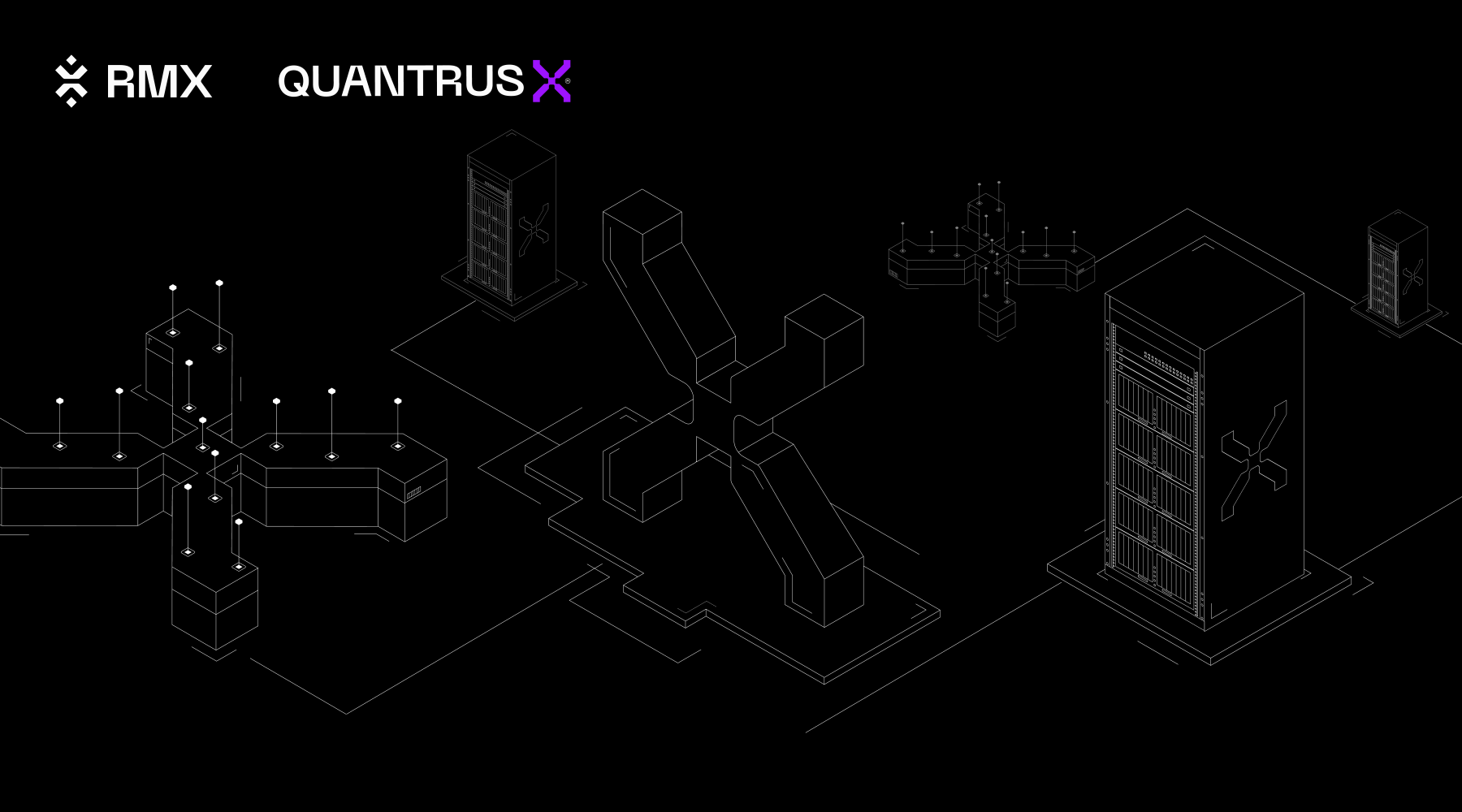
QXDDC, an intended distributed architecture.
The QuantrusX™ Distributed Data Center is intended to connect sites as peers that learn from one another without sharing footage or pooling customer data.
WHAT THE MARKET IS SIGNALING
Centralized compute is under financial strain.
Yahoo Finance reported that, “Gartner forecast that more than 80% of neoclouds [AI compute providers] will cease independent operations by 2030,” and Gartner’s analyst Will Sommer said spending growth "will be too low for most AI compute providers to recover their AI investments." [1] We believe site-specific compute is less exposed to that risk.
Concentration is an insurance risk.
Data centers often cluster, so one disaster will probably affect others, and with costly chips in one building "a single event could inflict eye-watering losses," according to The Economist, which added that "many large projects will be insured to less than half their value." [2] “Spreading computing across sites is designed to reduce the concentration of physical, financial and insurance exposure”.
Enterprises want control of their data.
According to an article by MarketScale, Palantir's US commercial revenue rose 149% year on year in Q2 2026, to $764 million. CEO Alex Karp attributes the demand to customers who believe “their competitive advantage should never become training data for future AI models.” [3] This is the concern that shaped QuantrusX™. [see Parts Two and Three]
The UK and Europe are moving too.
As reported by BusinessCloud, Britain's Valarian raised £37 million in a Series A offering for sovereign AI infrastructure, led by US investor NEA as its first defense and dual-use investment in Europe. UK AI Minister Kanishka Narayan said, "it is imperative that we build Britain's sovereign AI capabilities," and NEA's Mustafa Neemuchwala framed the question as "it isn’t which [AI] model wins, it’s who controls the environment intelligence operates inside." [4]
WHY IT MATTERS
On both sides of the Atlantic, we believe investors, insurers, buyers and policymakers are giving more weight to the same principles RMX was built around: intelligence produced where events happen, data that stays with its owner, and computing that doesn't depend on concentrated, rented infrastructure. QuantrusX™ is designed to deliver Real-World Intelligence on site, and QXDDC is intended to extend it across sites. Together, they position RMX to grow with the demand now taking shape.
The Briefs
- Part One: "Real-World Intelligence: AI That Runs Where Reality Happens." RMX Industries, 2 September 2026. Sets out Real-World Intelligence: on-site compute inside the perimeter, the site keeping the infrastructure, the data and the control, with the operator in the loop.
- Part Two: "QuantrusX™: Real-World Intelligence, on the Site You Already Run." RMX Industries, 22 September 2026. Describes QuantrusX™ processing on a node at the facility, with video recording and interpretation kept on the premises and response decisions left with the operator.
- Part Three: "QXDDC: Real-World Intelligence, Connected Across the Physical World." RMX Industries, 6 October 2026. Describes QXDDC as an intended architecture, designed to connect nodes as peers rather than concentrate computing at one location, and to share learning without pooling customer data.
Sources
- Yahoo Finance, Roxanna Maglangit, "Gartner Predicts '80% of Neoclouds' Out of Business by 2030: Here's Who Wins," 19 October 2026. https://finance.yahoo.com/technology/ai/articles/gartner-predicts-80-neoclouds-business-175912057.html
- The Economist, "Data centres are straining the insurance market," 22 September 2026. https://www.economist.com/finance-and-economics/2026/09/22/data-centres-are-straining-the-insurance-market
- MarketScale, "Palantir's U.S. commercial revenue jumps 149% as enterprise AI sovereignty demand accelerates," 11 August 2026 (updated 31 August 2026). https://www.marketscale.com/industries/software-and-technology/palantirs-us-commercial-revenue-jumps-149-as-enterprise-ai-sovereignty-demand-accelerates
- BusinessCloud, "Valarian raises £37m to build UK sovereign AI infrastructure," 14 July 2026. https://businesscloud.co.uk/news/valarian-raises-37m-to-build-uk-sovereign-ai-infrastructure/